Featured Post Today
print this page
Latest Post
Showing posts with label Review. Show all posts

News Google I/O Update : Google I/O 2017 Is Coming: What To Expect From The Future Of Android And Chrome

Google's annual I/O developer conference kicks off Wednesday, May 17 in California, and continues through the end of the week. We'll be on the ground at the show covering all the breaking news, but before then we're taking a closer look at what we can expect from this year's conference. more

Big products like Android and Chrome will likely get a bulk of the attention, and there will surely be at least a parting note about newer endeavours like virtual reality. So what are we most likely to see at the event? Here's a solid bet.

New details about Android O
It wouldn't be a proper Google I/O conference without an update on one of the company's most popular products, Android. The operating system is due for version 8.0 this year, and Google has already given us a peek of it with the developer preview that launched in March. We know the update will improve battery life on older devices; add picture-in-picture to Android TV products; and let users snooze notifications for 15 minutes, 30 minutes or 1 hour. We're hoping to learn even more about the update at the show.

Then there's the name. For now, the operating system has been unofficially dubbed Android O, following the company's alphabetical naming scheme. But Google has a history of paring the releases with a tasty dessert to make the name a little catchier. So what will the actual name be? Android Oreo? Mmm, Oreos...

A Google Home and Wi-Fi Router in One

Google debuted its artificially intelligent speaker at Google I/O last year, and rumours indicate that we could be seeing an updated version this year. As we said in our official review, Google Home was better at understanding voice requests than the Amazon Echo, but fell short of our expectations because it couldn't do enough.

We suspect that Google will be adding considerably more skills to the speaker this year, including the ability to make phone calls, according to a recent Wall Street Journal report. Another rumour we've seen floating around is that Google could debut a new version of the smart speaker that doubles as a mesh Wi-Fi router, according to a CNBC report. The device is rumoured to work exactly like Google Wifi from last year's conference, only this time it would double as a smart speaker.

Chrome gets a major update

A couple of years ago, Chrome was just a tiny blip in the Google universe. Now, it's one of the company's most popular products, and that is in some part due to the increasing popularity of Google Chromebooks.

This year's conference will most likely feature some news about Chrome OS and its ability to run an increasing number of Android apps, at least based on speculation. The expectation for a couple of years now has been that Google will combine Android and Chrome into one operating system unofficially referred to as "Andromeda". One of the key pieces to this is getting more Android apps to work on Chrome.

Nothing about the Pixel 2
Google launched the very first Pixel phone back in October, so it's unlikely that we'll see a new version at Google I/O this year. Google senior vice president of hardware Rick Osterloh has even said in an interview with Android Pit that there will be a second version of the search giant's phone later this year.

The phone "will stay premium" according to Osterloh's interview with Android Pit, and that lines up with other rumours about the device. The most exciting news is Google's recent investment in LG Display, which many believe is an indication the Pixel 2 will have a curved OLED screen. With all of this said, we probably won't learn anything else at the conference.

Google Assistant gets much smarter

Google launched a competitor to Apple's Siri last year called Assistant which we thought was a little too dull to be a truly useful digital assistant at the time. That should change quickly because in April, Google launched a developer preview of Google Assistant SDK, which lets developers build new skills for the platform.

Updates on virtual reality

Google launched its new Daydream VR headset one year ago at Google I/O, so it's unlikely that we'll see any new hardware. Still, it's clear that Google is deeply interested in virtual reality. Since Google Cardboard debuted at the 2014 conference, it's become somewhat customary for Google to update us on where it thinks the future of virtual reality is going.

The company will also likely talk about less exciting products like Hangouts, which recently became an enterprise product. There could also be updates for more consumer-focused Duo and Allo messaging apps, especially since Google just announced it can make custom emojis based on your selfies.

Then there are projects we most certainly won't hear anything exciting about. For example, Android Wear 2 launched at last year's event and is still working its way onto older devices, so we don't expect to hear much news on that front. Also the Chromecast Ultra launched in October, so it's unlikely we'll get any new streaming devices.

We'll be on the ground at the Shoreline Amphitheater in Google's hometown of Mountain View, California on May 17 (May 18 in Australia).

News OnePlus New Handset Update : OnePlus 5 Image Leak Tips Dual Rear Camera Setup, 8GB RAM, 4000mAh Battery

OnePlus 5 is scheduled to launch this Summer but leaks regarding the smartphone have been popping up online with increasing frequency for quite some time now. Now, fresh renders of the phone have surfaced the Internet and suggest that the dual camera setup at the back might feature a different design than suggested earlier.

As per the leaked renders, posted on Chinese microblogging website Weibo (first spotted by TheAndroidSoul), the phone does seem to sport a vertical dual camera setup as suggested earlier but the design appears to be slightly more refined than earlier leaks. The design on the smartphone, from the back side, seems to be somewhat similar to its predecessor OnePlus 3T but as we still have no leaks about what the front looks like.
Interestingly, the new leak also reaffirms some of the specifications that were earlier suggested for the smartphone. This includes presence of Snapdragon 835 SoC, an impressive 8GB of RAM (quite a few reports continue to point to 6GB RAM), and a humongous 4000mAh battery.


Recently, the smartphone's benchmark performance made its way to the Internet and if the leaked GeekBench scores are to be believed, the upcoming flagship from OnePlus outperforms two other smartphones that also feature the Qualcomm Snapdragon 835 SoC. In terms of multi-core performance, OnePlus 5 was able to outperform Samsung's Galaxy S8 and Sony's Xperia XZ Premium.

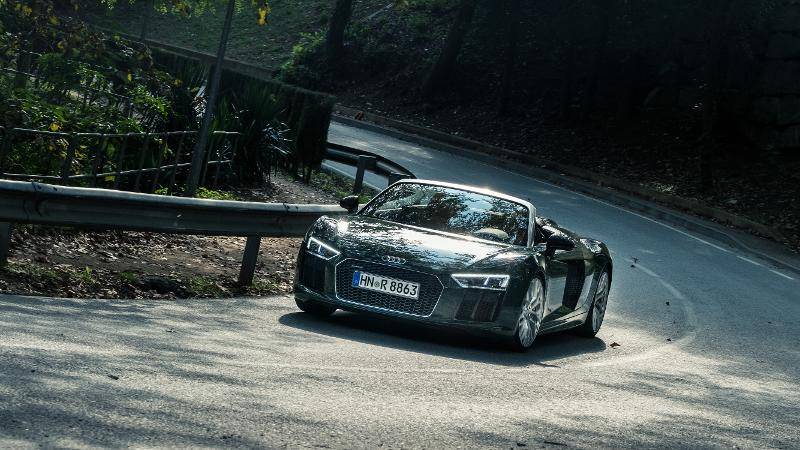
Latest Car News Update : Audi R8 V10 Spyder: A Supercar That Anyone Can Drive

 
Audi is a car brand that's seen quite a transformation over the last decade or so, shedding its slightly stuffy image of a car maker that builds solid saloons and estates in favor of a more desirable one thanks to a raft of new model lines.

The original TT played a big part in this, while the likes of the first RS6 estates, with their dirty great V8s shoehorned under the bonnet, were pretty much the quickest way to transport a family of four and their dog over long distances.

Then there's Audi's success at Le Mans, winning five times with the LMP R8 before ripping up the rule book and entering the diesel-powered R10 TDi, which won the endurance event in its first year in 2006.

That same year Audi took the wraps off its most ambitious road car yet, borrowing the name from its race-winning cousin to boot: the R8 supercar.

Cementing Audi's status as a premium car brand, the R8 represented the pinnacle of the company's engineering prowess, and now, 10 years on we have the second-generation model - it'll be coming to the US in Spring 2017.

But with the supercar landscape changing dramatically as hybrid technology is embraced, is there still a place for the likes of the £129,990 R8 V10 Spyder?

Highlights:

The star of the Spyder show is its hand-built, naturally aspirated 533bhp 5.2-litre V10 engine. This stunning piece of engineering shuns turbos and hybrid technology to propel you from a standing start to 62mph in 3.6 secs, and will push onwards to a top speed of 198mph.

Audi has employed the classic supercar trick of positioning the engine in the middle; as a result weight distribution has a slight bias towards the rear axle, which when coupled up with the R8's Quattro all-wheel drive technology, should produce stunning traction and grip.

While those investing in a V10 supercar might not have fuel economy at the forefront of their minds, the engine features Audi's advanced Cylinder-on-demand technology. This sees the engine management system shut down five of the 10 cylinders when you're trundling along in traffic (or posing along the streets of Knightsbridge or Monaco) to improve fuel consumption, but within milliseconds of you hitting the throttle, all 10 cylinders will burst into life to give you the full force of that glorious engine.
While supercars of old had heavy manual gearboxes with just as heavy clutch pedals, not so the Spyder. With its seven-speed dual-clutch S tronic gearbox it's simply a case of pressing the throttle pedal and the gearbox will do the rest, while for those times when you want to move things along a bit faster you can pull up the right paddle behind the steering wheel to shift up through the gears.

Styling:

Compared to the original R8 Spyder, the design has been sharpened up quite a bit, and it's all the better for it. While it may not have quite the same in-your-face styling as some of its rivals, the Spyder's understated and purposeful looks - enhanced by the addition of distinctive sideblades, which shove air into the engine, and make the car's midriff a little wider - give it a certain presence and drama, whether it's parked up or going full pelt.

Going topless:


For purists, a cabriolet is always going to be seen as a compromise over a coupe equivalent - rigidity and stiffness are compromised by lopping the roof off, while the roof mechanism and extra engineering required to add the torsional strength lost by the roof all adds weight. But that's to ignore the sheer thrill of having the roof down, and the howl of the V10 ricocheting off the surrounding buildings and straight back into the cockpit.

Audi's done a stunning job here. The mix of carbon and aluminium makes the Spyder some 55% more rigid than the previous model, as well as being some 25kg lighter. Compared to its hardtop counterpart it's only 125kg heavier, which may seem a lot, but it's impressive given the level of engineering required.
The folding roof mechanism is a masterwork of mechanical dance, taking just 20 seconds from a single press of a button to reveal the sky, while if the urge to drop the roof is so great that you don't want to stop (or, less thrilling, if it starts to rain), this can be done on the move at speeds of up to 31mph.

Cockpit:

While it might not offer quite the same sense of occasion as slipping behind the wheel of a Lamborghini or Ferrari, the R8 Spyder's cockpit is still a very nice place to be, with lots of leather and carbon to deliver a very premium, high-end feel.

The R8 Spyder uses what's been termed Audi Virtual Cockpit, shunning traditional dials for a customisable digital display. Rather than having a multimedia interface (MMI) in the central console and the instrument panel up front, the two are combined into one high-resolution display, with the choice of three views: classic, infotainment and sport.
Google Maps is built in for navigation, while it's easy to partner your smartphone with the Spyder - provided you tick the Audi Smartphone Interface optional extra that is. This enables you to share mobile phone content via USB and display it on the MMI, either via Android Auto or Apple CarPlay. Another optional extra is the Audi Phone Box, which allows wireless charging simply by placing your phone on the storage compartment, as well as creating a wireless connection via the car's aerial.

Sound system:

If you ever tire of the stunning soundtrack of the R8's V10 engine, then you're in for a treat with the Bang & Olufsen Advanced Sound System. It's an optional extra that will set you back another £1,750, but you get yourself a 16-channel amplifier with 13 speakers dotted round the cockpit (including two in each seat headrest and a subwoofer in the passenger footwell) that will kick out 550 watts. 
The sound quality is stunning - whether you've got the roof up or down, the clarity and depth are mightily impressive.

How it drives:


You'd think a £130,000+ V10 supercar would be intimidating to drive, but that's not the case at all. With the roof up, the gearbox set to full auto and the Drive mode dialled into Normal or Comfort, you've got an incredibly comfortable and cocooned cruiser that will happily demolish those motorway miles, or be quite at home just pootling around town. Find a twisty A-road, drop the roof and change the engine mode to Individual or Dynamic, and the Spyder's Le Mans-winning DNA shines through.
Put your foot down and the Spyder surges forward, with the engine note changing from a deep rumble to a loud howl as it nears its redline. Flick the right paddle behind the steering wheel and the change is seamless, while the snarling crackle that greets this change of gear is incredibly addictive.

This level of performance should be terrifying, but the grip is staggering - the all-wheel Quattro technology that saw Audi dominate the World Rally Championships in the 1980s inspires so much confidence as you travel through a bend that you'd have to do something pretty dramatic to unsettle it.
With all this power you'd naturally want to be able to stop pretty sharpish, and the optional-extra ceramic brakes that our car had deliver incredible stopping power. They can be a bit snappy to start with, but once you've generated a decent amount of heat their stopping power is immense.

Verdict:


The Audi R8 V10 Spyder is an engineering masterpiece. Unlike some supercars that can be hard to live with on a daily basis, the Spyder is a true supercar that you can enjoy every day. It's comfy and quiet when you need it to be, but a flick of the switch will see it transform into a true howling and cackling supercar that will punch you in the back as you climb through the gears at a staggering rate.
The coupe may be lighter and just a bit quicker, but you'll soon forget about that with the roof down and the sound of that glorious V10, just a couple of feet away, screaming through the rev range. The R8 V10 Spyder really does take your breath away.

News Technology Threat Update : Dangerous Backdoor Found In About 3 Million Android Smartphones, BLU Affected The Most

Just a few days ago, a backdoor was discovered in various Android smartphones that was being used to send call logs and text message archives to servers hosted in China. Now, an even more dangerous rootkit has been discovered, with devices from US-based smartphone brand, BLU, being found to be among the most affected.

Security research firm, BitSight has released an advisory about a rootkit found in the Ragentek firmware used in certain Android smartphones, mostly manufactured by Chinese OEMs. The firm carried out extensive tests using a BLU Studio G smartphone, which involved installing a tracking file using the exploit. Since the firmware allows installation of apps with elevated privileges, a compromised device can be used to do a lot of harm.

By monitoring the data transmitted to a couple of domains, BitSight identified nearly 55 smartphone models, which feature the backdoor. Many more devices with unknown identifiers were also discovered. US-based brand, BLU, is the worst-affected with about 26 percent of its smartphones found with this backdoor. The other brands include Chinese vendors such as Doogee, Leagoo and Infinix. BLU is said to be addressing the issue, but no details of the process are available yet.

According to BitSight, requests to the remote servers were largely made from phones used in institutions such as banks, hospitals and governments, where these devices probably were deployed in bulk due to low prices. Network admins or enthusiasts can monitor their traffic for requests to the following URLs to find out whether they have any affected devices in their network:
  • oyag[.]lhzbdvm[.]com
  • oyag[.]prugskh[.]net
  • oyag[.]prugskh[.]com
The recent discoveries about backdoors in smartphones coming out of China will surely raise concerns in the global market, where many of these devices are being sold with local branding as in the case of BLU.

News Gaming Update : A Hidden Trailer In Watch Dogs 2 Proves To Be More Interesting Than Ubisoft’s Entire Catalogue

Watch Dogs 2, the game where you play Marcus Holloway, hacker extraordinaire, has revealed an a mission where you steal a game trailer for an in-game version of Ubisoft.
Ubisoft is the company that is developing Watch Dogs 2 in the first place, but that’s not the interesting part. The trailer, reproduced below, shows off a game that actually looks rather nice. It’s so good, in fact, that many are hoping that this is a teaser for a game that Ubisoft is already working on.
As you can see, the trailer features a game with a vivid colour palette and what looks like a reasonably fleshed out space game. If I’m honest, I’d go so far as to say that the trailer actually looks far more interesting to me than the bulk of Ubisoft’s games.

If Ubisoft is indeed developing the game, I’m in two minds about the outcome. On one hand, I’m excited, on the other hand, I’m terrified; this is Ubisoft we’re talking about after all. If nothing else, the company has a reputation for dumbing down games and it has no pedigree when it comes to multiplayer gaming.

Watch Dogs 2 will be available tonight for PS4 and Xbox One and on PC by 28 November. The PC version is obviously the cheaper one, but given how badly Ubisoft ported the last game, the console version may be the one you’d want to play.

New Technology Update : A Malicious WhatsApp Video Feature Invite Is Spreading Across The Messaging App

WhatsApp recently announced the launch of its video calling feature which has started to roll out for Android, iOS and Windows Phone users. While a number of messaging apps offer this feature, WhatsApp has been a little late, it does however have the biggest user base across the globe.

While the news is welcoming, many users are receiving as well as sharing an unverified link on WhatsApp which is said to be an invite to activate the video calling feature. An invite system was introduced last year on Whatsapp when the voice calling feature was rolled out. It seems that certain scammers are trying to take advantage of this as they have spread a similar looking fake link for the new video calling feature.

WhatsApp has not officially released any links this time to enable any feature, so in case you get any such links, do not visit any of the links. Visiting these links could be harmful and could expose your personal data.

According to a report, the link takes you to what seems to look like an authentic page where it asks you to send the malicious link to other people on your list. It also mentions the existence of group WhatsApp video calling, a feature that is still not officially available on the platform.

If you do happen to get an invite to activate the video calling feature on WhatsApp, do ignore it. To get the feature you just need to update the app to the latest version. In case you don’t see an update, wait for a couple of days as it is rolling out in phases.

News Game Tech Review : Rise Of The Tomb Raider

When we last saw Lara Croft, she was growing out of being a victim. A victim of fate, of other people’s aggression, of her own uninspired previous playable incarnations. She’s still growing, but she’s different now.

For most of Rise of the Tomb Raider, the second installment of a rebooted Tomb Raider series, Lara Croft doesn’t go around being scared. She still faces down overwhelming odds, grapples with doubt, and absorbs a ton of trauma. The newest iteration of the iconic video game heroine displays less fumbly panic than she did in 2013’s Tomb Raider. There are more moments of steely determination and fewer moments where she pauses to psych herself up. She knows what she’s capable of—she hasn’t forgotten that one time she wiped out a supernatural army, climbed a mountain, and took down a sun god. It feels like she’s grown.

That feeling of growth is a key factor in this sequel. For Rise of the Tomb Raider to succeed, it needs to convince players that Lara has matured, but that she still has more growing to do. Yet the changes in a new installment can’t be too radical, lest this Lara become unrecognizable to old and new fans.

Rise of the Tomb Raider tells the story of young Lara Croft, alone in a dangerous place, exploring ruins, solving puzzles, and shooting lots of guys with flaming arrows. It combines hunter/gatherer elements—where you need to scavenge for the stuff you need to survive or make weapons—with a mix of melee and ranged combat with pickaxes, guns or a bow and arrow.
Rise opens yet again with Lara searching for proof of a time-lost civilization. This time, however, her motivations come from a deeply personal place. Before he died, Lara’s father was on a quest to find the Divine Source—an artifact said to grant eternal life—and the apocryphal Prophet who performed miracles with its power. Lara’s continuation of his work is directly linked to her desire to restore respectability to the Croft name—her father’s name. Her travels take her to a snow-swept mountain range in Siberia where she comes into conflict with a mysterious organization named Trinity, whose paramilitary goons are also looking for the Divine Source. Hello, cannon fodder.

Crystal Dynamics’ latest effort at a Tomb Raider game benefits from smartly imagining the psychological underpinnings of both its heroes and villains. Just as Lara is trying to contend with her father’s legacy, the main bad guy’s thirst for power is likewise driven by very personal reasons. There are moments that you feel like you’re fighting against a screwed-up worldview and not just a bunch of artificially-intelligent mannequins.

Rise of the Tomb Raider tweaks the gameplay formula established in its 2013 predecessor. There’s a new crafting system that has Lara constantly foraging for resources that she can use to make ammo, equipment or bandages. Once she has enough resources, she can craft what she needs on the go. The player holds down the left bumper and can craft, mid-action. So, collecting deathcap mushrooms lets her make poison arrows that release a fatal gas. Similarly, other new craftable items increase the ability to silently skulk through encounters if you want. If loud, messy combat engagement is your thing, then you can quickly turn bottles and cans into molotovs and hand grenades.

Lara’s newly improved abilities are a direct reflection of how much effort you put into exploring the gameworld. As her skills increase, her ability to spot resources and read the world gets more powerful. Lara buffs her mastery of ancient languages by finding murals and improves her arsenal and equipment by amassing exotic animal hides. Other combat upgrades let you pull off feats like multiple headshots at once with the bow. The way that ROTTR’s mechanics are structured feeds into the overall sense of growing or maturing.
Aside from its opening chapters, Rise of the Tomb Raider is set around the geothermal valley in Siberia where Lara and Trinity have tracked the Divine Source. It’s a gorgeously layered landscape that feels more like an open world than the terrain of the 2013 game. Whether snowy or lushly green, the terrain feels alive, teeming with plant-based resources or animals to stalk (or flee). Aside from scads of posthumous testimonials about the history of its events and fiction, the game also teases players with optional tombs. The entrances to these tombs are secreted away and you’ll need to apply some extra effort to even find them. Once you find these tombs, you’ll be faced with a single physics-based environmental puzzle—familiar to longtime Tomb Raider fans. But you’ll need to navigate through various section of the tombs to trigger various elements necessary to their solution. As a result, they wind up feeling bigger and more significant.

The game’s also got side missions—given to you by actual in-world quest-givers—that grant you new tools/weapons, like a lock pick and crafting tool. You can also use in-game currency to obtain some of these weapons and equipment from the supply shack that opens up in the first third of the game.
This is an enjoyable sequel and the reason it’s very fun is because it feels upgraded in nearly every way. When I tried for stealthier approaches in the 2013 Tomb Raider, the results felt haphazard. In this game, I was able to plan and execute better, thanks to a plethora of options that let you blind or poison enemies from afar. The feeling of being a cunning predator was a welcome change for me, especially after enduring the emotional rawness of the last Tomb Raider. Another thing I liked about Rise of the Tomb Raider is how it constantly rewards your curiosity. If you head to a seemingly innocuous cliff or stop and take in your surroundings with Lara’s survival instinct, you’ll almost always find a resource or collectible waiting for you. I leaned hard on Lara’s survival instinct because Rise of the Tomb Raider is the kind of game where I didn’t want to miss a thing.

I played Rise of the Tomb Raider much like I did its predecessor: almost exclusively with the bow and arrow and as stealthily as my patience would allow. This time around, however, I didn’t feel like a trembly twentysomething, scared of every shadow. I felt more like a hunter and explorer, systematically taking down enemies and challenges. That said, I didn’t like having to unlock the same suite of weapons as in the last game. Lara knew how to counter enemies and perform quick stealth kills in the last game—why should she have to re-learn it now?

Unlike the Tomb Raider game from two years ago, Rise doesn’t have any competitive multiplayer. Instead, it offers another gambit geared to entice players to keep returning to the game. The Expeditions feature lets you play remixed chunks of the story campaign in one of four modes—Chapter Replay, Chapter Replay Elite, Score Attack or Remnant Resistance.

In Remnant Resistance, you can create custom five-part missions by picking specific objectives, loadouts and time of day. Once you finish one of these missions, your friends will be challenged to do the same.
Completing Expeditions missions earns credits and winnings can be increased by using collectible cards as modifiers to increase difficulty, grant buffs and add challenge objectives.
So, a Lobotomy challenge tasks players to notch five headshots with the bow and arrow and using a Big Head card on enemies swells their craniums makes their torsos and limbs more resistant to damage. The credits you earn in Expeditions can be used to buy more card packs for increased variability in the missions you create. I enjoyed the handful of Expeditions missions I took on and the feature feels like a clever way of re-jiggering the work that’s already in the game.

Rise of the Tomb Raider’s greatest success is in how it encourages exploration, which in turn makes you feel more connected to its fictional world. Every hapless corpse in the frozen Russian wastes is a reminder that Lara’s moving through a place that’s killed many others. As I played, she came across as increasingly gifted, with enough spirit and ingenuity to find ways to see herself through to the other side. This Lara isn’t a wide-eyed newcomer, nor is she a flinty veteran. She’s somewhere in between. Rise of the Tomb Raider makes me want to follow her where she goes next.

Additional Thoughts on PC Version :
Sometimes you just want to play a really pretty PC game, and in walks the PC port of Rise of the Tomb Raider. I already played through the enjoyably acronymed “ROTTR” on Xbox One last fall, and at the time was struck by how gorgeous the game could be.

It stands to reason that it’d look even better at a higher resolution and frame-rate, with some extra PC bells and whistles dropped in. Then again, a few messy recent PC ports have demonstrated some of the many ways PC versions can go awry. How does Rise of the Tomb Raider’s stack up?

I’ve played five or six hours, and my verdict: solid port. The porting job was handled by the Dutch studio Nixxes, who usually handle PC porting for most Square Enix-published games (2013’s Tomb Raider, Deus Ex: Human Revolution, Sleeping Dogs all come to mind). They do fine work, and from what I’ve played ROTTR is no exception.

I recently upgraded my PC, which is worth keeping in mind as I recount my experience: I’m running an i7-4770k with an overclocked 6GB GTX 980Ti, along with that 144Hz G-Sync monitor that I love so much. With that setup, I’m able to run the game at 2560x1440 (1440p) resolution at high or very high settings and, for the most part, it stays north of 60fps, occasionally dipping down to the still-playable mid-40s or 50s. I haven’t had much time with the new optimized Nvidia driver that hit today, but I haven’t seen a big difference between the game before and after I installed the driver.

ROTTR pushes my PC, but I’m actually happy to have a game that pushes my system for the right reasons. Unlike the frustrating PC ports of Just Cause 3, Fallout 4 and Batman: Arkham Knight, I have a good sense of the tradeoffs I’m making and so far haven’t felt like the game is running poorly for no discernible reason.

And it really is incredible looking, particularly in 1440p. Look at this screenshot:
Enhance:
Enhance:
In-engine cutscenes are gorgeous, and I’m regularly impressed by how much this latest version of Lara Croft looks like an actual human being.
I mean, like... enhance:
Jeez.

ROTTR’s PC version offers a variety of graphics settings; you can see mine here:
 

I’ve dropped the Level of Detail setting down from Very High to High and dropped Shadows to Medium, which keeps the game running well aside from some frame-rate drops as I enter some of the bigger open areas and some hitches in the midst of transition animations from one area to another.

Then there’s the hair. Rise of the Tomb Raider is actually the first PC game in which I’ve left the hair tech—called “PureHair” this time around—turned on, rather than turning it off to improve my frame-rate. PureHair does impact performance somewhat, but Lara’s hair looks good enough that I’m fine taking the hit.

Aside from its graphics, Rise of the Tomb Raider is another third-person action/adventure game that plays better with a controller than with a mouse and keyboard. Running, sneaking and shooting all work fine with a mouse and keyboard, and as usual I’m much more accurate when using a mouse. But platforming and puzzle-solving feel odd with a keyboard input. The game has some mechanical interactions—winding winches and breaking down brick walls, etc.—and they feel much more natural on a controller. Similarly, jumping puzzles feel awkward when navigated with a keyboard. Some of that is due to my own comfort level playing this type of game on consoles, so your mileage may vary.

News Update On Google Maps : Google Maps Code Transformed Into Infinite Series Of Abstract Art

If Jackson Pollock had been a cartography nut this is what his classic works of art might have looked like.

A Boston-based coder has created a site that generates random Google Maps images that are assigned random color and zoom settings in a manner that creates a constant stream of stunning abstract art.
The Random Google Maps site, created by Shaun Utter using the Google Maps API, pulls its geographic source material from 26 predetermined cities from around the world, some of which you may recognize.

However, you'll have to look quickly, as each image only lasts four seconds, after which it's replaced by another abstract image.
And because the lines and shapes of the maps at their various sizes vary from precise and repetitive (roads and building grids) to random and organic (mountains and off-road terrain), the series of images manages to look surprisingly original and deliberate.
Generative art, that is, art created through automated means, is sometimes derided as a soft assault on human-created abstract art. But Utter's creation is more proof that code can indeed create hypnotic and beautiful visuals, even if those visuals lack the fire of direct human inspiration.

It's not Picasso, but more and more of these generative art pieces are popping up in museums next to your favorite art masters. Humans, it's time to step your game up.

News Apple MacBook Pro Updae : MacBook Air 2016 Release Date, Specs & Price Update: Laptop Launching Earlier Than Expected? [Rumors]


CUPERTINO, CA - OCTOBER 20: Apple COOTim Cook (R) looks at the new MacBook Air during an Apple special event at the company's headquarters on October 20, 2010 in Cupertino, California. Apple CEO Steve Jobs announced the new MacBook Air in eleven and thirteen inch models starting at $999. He also announced the OSX Lion operating system for Mac computers. (Photo : Getty)

Apple is reportedly taking a new marketing route with the MacBook Air 2016 i8s which has recently been rumored to be launched earlier than expected.

According to Geek Snack, the new MacBook Air, which was initially set to hit the market by March 2016 is being prepped for an early release this November.

With the surprisingly release of the Moto X Style, Moto X Play and Moto G, the outlet sees an early 2016 MacBook launch to be very plausible.

Apple and Motorola have been repeatedly pitted against each other as leading companies in the tech manufacturing industry.

Rumors suggest that the production of MacBook Air 2016 i8s has been ramped up to be released just in time for the Holidays this 2015.

Other rumors also imply some negative reviews of this plan, especially after considering that the MacBook Air 2015's recent release was not been graciously accepted by the public because of its repetitive features and lack of change for a relatively expensive device.

Christian Today sees the $100 introductory price tag for the upcoming 2016 MacBook Air as "the lowest-priced Apple laptop in history."

According to the outlet, the Cupertino-based company incorporated the Intel Core-M-based Skylake processor, the latest chipset Intel has to offer.

The new line of MacBook Air would also be made available in two sizes, a 13-inch and a 15-inch model which would both sport a lighter and thinner exterior than its predecessors.

It would also boast a retina display that offers users an enhanced viewing experience through a 178-degree viewing angle with its richer and more vibrant colors.

The upcoming line of laptops from the iPhone-maker is also expected to run on Microsoft's Windows 10 out of the box.

It would have 4GB random access memory as well as a 128GB and 256GB SSD storage while its premium model is seen to be running on 8GB RAM and 512GB storage space.

Geek Snack also predicts that the upcoming MacBooks from Apple would maintain its backlit keyboard but would replace the rigid buttons with ones that are easier to click and are textured to lessen mistypes.

It would also be thinner than all other Apple laptops - or any laptop at that - with about 11.5 mm thickness.

These are mere speculations and rumors. Apple has yet to confirm any detail as of the writing of this article.

News Gaming Review Update : Call Of Duty: Advanced Warfare Review – 6 Reasons It’s Awesome (And 4 Reasons It’s Not)

The day is finally here: Call of Duty: Advanced Warfare is officially now out in the wild, though if you remembered to pre-order the Day Zero edition, you’ve probably been playing for the better part of a day already.

The latest entry into the CoD franchise comes hot on the heels of what’s popularly regarded as the worst entry in the core series, Ghosts, which was pretty much just an uninspired Greatest Hits of the franchise without any invention of its own, and boy, it really, really didn’t feel next-gen at all, did it? 
It’s a pleasure to report, then, that Advanced Warfare is a significant improvement over its competent yet unoriginal predecessor, introducing a number of new elements to breathe fresh life into the franchise, all while course-correcting a number of the complaints people have with the series.

Sure, it’s still at its core the same CoD that sells tens of millions of copies per year, and some will inevitably have their gripes with that, but this latest entry throws down the gauntlet for Treyarch, who will presumably be developing next year’s edition.

It’s a surprisingly great game but far from perfect, so here are 6 reasons why CoD: Advanced Warfare is awesome, and 4 reasons why it’s not.
6 Reasons It’s Awesome…
 
1. Kevin Spacey :
And of course, who can forget the inclusion of one of Hollywood’s greats, Kevin Spacey, as the villainous President of Atlas, Jonathan Irons? Though the CoD series is no stranger to Holllywood talent (Gary Oldman, Kiefer Sutherland and Sam Worthington have all had significant parts in previous games), this is the first game to really harness an actor’s star power and make the most of it.
The photo-realistic visuals are a major plus for Spacey’s appearance, impressively recreating the actor’s facial expressions and, with a spirited vocal performance from the actor himself, help create a thoroughly believable villain. Though Spacey does have the odd ropey line of dialogue to chew through, he does so with admirable enthusiasm, and unlike so many celebrity voice actors in video games, clearly isn’t just phoning it in to pay off a yacht.

Plus, for anyone who watches House of Cards, seeing the video game-addicted Frank Underwood in a game (considering that he and Irons are rather alike) is just too deliciously fun to pass up.

So, that’s why you absolutely should be picking up Advanced Warfare this weekend, but what about the areas where it doesn’t quite measure up? Here are 4 reasons why AW isn’t quite so awesome all the time…

2. Firing Range :

A small but hugely welcome addition to the CoD series comes in the form of the firing range. Say you’re in the lobby waiting for the next match to start and want to try out a new weapon? Just select it, then hit the firing range button, and you’ll be quickly transported (without a single loading screen, impressively) to said range, where you can shoot the weapon to your heart’s content.
This is a huge improvement over having to simply pick a weapon and hope for the best, having to wait to try it out on the battlefield, which can be frustrating if it turns out to be a dud and you’ve made no other custom classes. It may seem like a tiny little fix, yet it says to gamers that Sledgehammer aren’t just interested in the big picture, but also the small things which, when added up, can be either supremely detrimental or complimentary to a game depending on their inclusion or exclusion.

3. Insane Customisation :

Customisation has always been a huge part of the Call of Duty franchise, with Infinity Ward and Treyarch trying to give players as much choice as possible about their load-out and how they head into combat. Sledgehammer have followed ably in their shoes, then, giving players more freedom of choice than the series has ever seen.
It’s fair to say that the game seems inherently more “open” because of the Exosuit and the numerous upgrades (invisibility, health augmentations and so on) that this invites, but even so, the developer has improved upon numerous aspects introduced in earlier games. The Pick 10 system introduced in Black Ops 2, for instance, has now been expanded to Pick 13, ensuring players don’t get frustrated with arbitrary restrictions and can build the set-up they desire.

Though the load-out screen might seem dizzyingly complex to a newcomer (and even for veterans, changing your load-out in between matches requires fast reflexes and a little good luck), it is, like the Exosuit, something you’ll likely adjust to after dealing with it a few times.

4. Vastly Improved Single Player :

Ghosts received a lot of flak for its, to be polite, unoriginal single-player offering. It was nothing more than a collection of the coolest set-pieces from the series re-skinned with a slightly different plot (albeit one you probably won’t remember). Advanced Warfare’s single-player, though still subject to many of the flaws that affect every game in the series, is a significant improvement, and absolutely worth playing through, even if you tend to skip this portion of the game.
For starters, the game is a massive step-up from Ghosts visually (though sadly this doesn’t carry over to the multiplayer), with a great deal of attention paid to particle and lighting details, while facial expressions (particularly Kevin Spacey’s) look more realistic and believable than ever. After so many people complained that Ghosts just didn’t look next-gen, at least the single-player portion of this game measures up to the standard set by last year’s similarly futuristic Killzone: Shadow Fall.

Another frequent issue with the campaign modes in this series is that they’re all woefully short. AW doesn’t break the mold hugely in this area, but it’s nowhere near the embarrassingly short 4-hour blast-a-thon that was Ghosts’ campaign. AW’s story mode will take most players 6-ish hours on regular difficulty, while on harder modes, it can easily take up to 7-8 hours.

Though the plot is still politically immature, there’s plenty of creaky dialogue and a number of familiar missions, it’s nevertheless a massive improvement over Ghosts’ rather pathetic attempt at a campaign.

5. Excellent Multiplayer Maps :

If Ghosts featured a relatively disappointing and forgettable array of maps, this year’s selection more than makes up for it. Sledgehammer have given us some ludicrously entertaining maps that are impeccably well-designed to fit the free-wheeling gameplay style that the Exosuit promotes. Terrace, a night-time, neon-lit hotel, is an instant classic, as is Greenband, a hedge maze-type map that will have you accidentally falling to your death numerous times if you’re not careful about where you boost to.
In fact, it’s hard to pick a bad one out from the bunch: Riot is an intense prison scenario, and Detroit is, well, Detroit (except even more of a mess). Though some are less memorable than others (Ascend, set in an airport, is totally forgettable no matter how many times you play it), but none of the current map selection elicit groans or sneaky lobby exits when they come into rotation.

Though the Exosuit itself inevitably takes a lot of the credit for making these maps work so well, that Sledgehammer had the ingenuity to design them so studiously in the first place shouldn’t be ignored.

6. The Exosuit :

Easily the biggest shake-up this year is the introduction of the Exosuit, a special mechanical exoskeleton which allows players to jump, boost and dodge during combat, adding an entirely new level of verticality and intensity to the typical CoD shooting mechanics. Yes, it’s clearly ripping off Titanfall’s much-praised gameplay (minus the wall-running), but you know what? It’s great.
The exosuit isn’t just a nifty new way to navigate the maps: it completely changes the way you play the game. Playing Kill Confirmed is now more treacherous than ever, because dog tags can be floating around 20 or 30 feet in the air, and Domination can see enemies flying at you from a dozen different directions, all desperate to capture your base.

The increased movement speed that the suit allows makes the already-frantic pace even more breathless, yet it somehow never becomes too overwhelming, and after a few games, most players should have adjusted to this insane new mechanic. Also, though it is only used intermittently throughout the single-player campaign, it certainly helps reinvigorate gunning down hundreds of nameless foes from time to time.

Needless to say, if next year’s game doesn’t feature the Exosuit, it will need to come up with something mightily interesting and innovative to fill the void, because after just a day of play, this feels like something that should remain a vital mainstay of the series from now on. It’s a genius addition by Sledgehammer.
---------------------------------------------------------------------------------------------------------------

And 4 Reasons It’s Not

1. Technical & Design Issues :


As previously mentioned, from a technical perspective, the multiplayer aspect of AW just doesn’t seem particularly advanced from Ghosts. While the single-player is a fine-tuned operation and the Exosuit is brilliantly implemented, running smooth as silk, the multi-player still feels stuck in the past from a technical perspective.

On the San Francisco-set Defender map, there’s a huge body of water which will occasionally transform into a tidal wave and spill onto the land. This gives players a chance to get their feet wet in the water, but if you decide to go prone, the game will stutter between its above-water and below-water visuals, which for a brand new game running on the PS4 and Xbox One, is laughable.

From a design perspective, there’s also the frankly bizarre choice to have the names of players talking over comms appear in the middle of the screen in an obnoxiously large font. Who needs to know that kanyewest_fan412 is the guy playing loud, distorted music over his microphone? The idents should be kept to the bottom right-hand corner of the screen where they belong, in a much, much smaller font size.

Have you been playing Advanced Warfare? What do you think so far? Shout it out in the comments!

2. Lack Of Small, Gimmicky Maps :

Though the map selection is on the whole fantastic and the Exosuit doesn’t really invite restrictive maps, the series continues to lack a single tiny, arena-esque map like the classic Shipment (Modern Warfare) or Rust (Modern Warfare 2). These maps (Shipment especially) were so small that you couldn’t go two seconds without seeing an enemy, and though chaotic, were hugely popular with fans (probably because they’re an easy way to level up),
Sadly, recent games haven’t included any similar, gimmicky maps (perhaps because Activision don’t want players leveling too quickly), and though the selection for AW is itself pretty great, the inclusion of just one small, intense map (even if it were an HD remake of Shipment) would make the rotation even better.

This one’s unlikely to come to fruition, sadly, but if it came along in a map pack DLC, it might actually be one worth paying for…

3. “Out Of Bounds” :

One of the more disappointing if not unexpected aspects of the maps is that they’re still as restrictive as ever. This is particularly problematic given the freedom that the Exosuit purports to give players. You likely won’t go a single multiplayer game without seeing that annoying, orange “Out of Bounds” warning sign appear, indicating that you’re flying too high.
But given that the Exosuit mechanic promotes this type of play, doesn’t it seem like a contradiction in terms? Plus, if there’s room in the sky to boost around, why give players the warning in the first place? It should only be used for the edges of the map, which are so poorly disguised you’ll know exactly where they are anyway.

Hopefully Sledgehammer will realise the problematic nature of constantly pointing out the limitations of the maps, and understand that gamers don’t need their hands being held. Above all else, make maps that cater even better to the high-wire thrills of the Exosuit, or at the very least, only warn players that they’re going out of bounds when it really matters (which is basically never).

4. It Still Doesn’t Look Next-Gen :

Though the single-player campaign looks sleek, sexy and shiny, the same can’t really be said for the multiplayer offering, which doesn’t look much better than Ghosts, suffering from the same muddy textures, jagged geometry and glitchy visuals. Is the above image, of a cracked bus windshield taken by us on the map Riot, really acceptable in a 2014 video game?
The excuse that the graphics needed to be toned down for 18-player multiplayer mayhem just doesn’t really wash, because EA have managed two visually stunning Battlefield games with significantly more players than that on the same hardware, so what is it about the CoD games that makes them feel perpetually a few years behind graphically?

Does it ruin the experience? Absolutely not, but it’s a shame the beautifully-designed maps aren’t accompanied by prettier textures, and it does result in the occasional wince-inducing moment when you come up close to an object (anything with writing on it is particularly bad), at which point the illusion of immersion is irreparably broken.

News Samsung Galaxy Handsets Update : Samsung Galaxy Note 5 And S6 Edge+ Photos Leak Iin Full

 Samsung is readying two new phones for its Unpacked event later this week. Now we've seen the Galaxy Note 5 and Galaxy S6 Edge+ leak out it's almost certain these two phones are set to feature.

Sources speaking to Chinese website Digi-Wo have now shared leaks of what are allegedly the two new phones.

The leak suggests the Galaxy Note 5 is set to run on the Exynos 7420 - not the 7422 as some of the previous rumours suggested. It looks like the microSD card slot has been dropped, like it was on the Galaxy S6.

Big phones everywhere :
It could be a SIM and microSD combo tray slot this time around, but it's more likely Samsung has just decided to drop it.

It's also not clear from the photos how the S Pen pops out of the phone - rumours built up around a new technology developed to get it out quicker.

There's even a shot of the phone in all its packaging.
As for the Galaxy S6 Edge+, it's pictured yet again but there isn't a lot to show. It's just a bigger version of the Galaxy S6 Edge.
Be sure to take this news with a pinch of salt though, this could end up being a really elaborate hoax, but we'll know for sure come the official event on Thursday.
 
Support :. Copyright © 2015. The Technology Zone - All Rights Reserved
Template Created By Gourav Kashyap Proudly Powered By Blogger