Featured Post Today
print this page
Latest Post
Showing posts with label KitKat. Show all posts

News Moto Handset Update : Motorola Moto E 4G Version Could Launch In India By May

US-based Motorola is hopeful of introducing the 4G version of Moto E smartphone in India by May this year, pricing it under Rs. 10,000 as it looks to compete with brands such as Yu and Xiaomi.

The company had announced the global launch of 3G and 4G versions of the new Moto E in more than 50 countries in Asia, North America, Europe and Latin America.

The unlocked 4G-enabled handset is available for $149.99 (INR 9,400) in the U.S. while the 3G version is priced at $119.99 (INR 7,500).
The 4G version of the handset would compete with Xiaomi Redmi Note 4G (INR 9,999), Yu's Yureka (INR 8,999) and Lenovo's A6000 (INR 6,999).

With increasing usage of data services and telecom firms preparing to offer 4G services, handset makers are also lining up devices at affordable price points to tap the opportunity.

On Tuesday, Motorola launched the second generation of Moto E that includes Qualcomm Snapdragon processor with a 1.2GHz quad-core CPU and advanced graphics. Priced at INR 6,999, the new Moto E will be available exclusively on e-commerce marketplace Flipkart from tomorrow.

Running on Android's latest Lollipop operating system, the 3G handset features a 4.5-inch screen and 5-megapixel rear camera. The phone has a 2,390 mAh battery.

Users will explore Moto experiences such as Moto Display for updates, notifications and Moto Migrate to easily transfer photos, videos and contacts with the new Moto E.

News Moto Handset Update : Larger Display, Better Processor And Android Lollipop: Here’s How Moto E 2015 Beats Moto E First Generation.

Both Motorola and Flipkart slashed the price of the Moto E recently,  leading to speculation that a new variant was on its way, and as expected, here it is! The company has quietly launched the all-new and highly anticipated Moto E second gen device.
Given that the phone is aimed at developing nations, we expect the device to reach the Indian shores soon. So what’s new about the phone? The successor to the Moto E has improved some key specifications and also adds support for 4G LTE. We list some of these in detail:

Design:


Motorola’s new Moto E is slightly larger than its predecessor, measuring 129.9 x 66.8 x 12.3 mm. However, it retains the same thickness and also adds a light curve to the design. In terms of portability, it seems to be slightly heavier at 145 grams. The previous Moto E weighed 142 grams. But lets face it, a mere 38 grams  is unlikely to make much of a difference to a user.
Design-wise, Motorola has added some subtle changes and tried to employ the same aesthetics that are already seen in the higher-end Moto G and Moto X devices. If you remember, the Moto E comes with two metal bars – above and below  the display. Motorola has now bid goodbye to the one below the display.

Motorola also gets more colourful with the new Moto E. It has introduced some new covers that it calls ‘Bands’. These bands are available in six colour options including Golden Yellow, Turquoise, Blue, Raspberry, Purple and Red. The new model also gets five “Grip shells” available in Golden Yellow, Charcoal, Turquoise, Blue, Raspberry.

Display :

The Moto E second generation also comes with a slight change in the display. It has been increased from 4.3-inch to 4.5-inch, making it more similar in size to the Moto G. However, Motorola disappoints with the resolution, which doesn’t seem to have changed. It still retains the same qHD display at 540 x 960 pixels. This means effectively, that the Moto E 2014 model will come with a better display as more pixels are pushed onto a smaller display size. The pixel density of the older Moto E is 265 ppi compared to the 245ppi seen in the 2015 model. However, to the human eye, this shouldn’t make much of a difference either.
OS :

While Motorola is still conducting an Android Lollipop soak test for the Moto E 2014 model, its successor now runs Android Lollipop. This means, you can expect the latest OS goodies from Google on the budget handset. Motorola has also reportedly added features like Moto Display for notifications and updates.

Camera :

One of the biggest drawbacks of the original Moto E was the lack of a front-facing camera, especially considering the popularity of ‘taking selfies’. With the new Moto E, Motorola has fixed the issue. You still get a mediocre VGA camera, but we suppose that this is still better than having none. The company has also retained the 5MP rear snapper, but it has been improved from a ‘fixed focus’ to ‘auto-focus’.

The company has also played with some gestures for the camera. If you twist your wrist twice, the new Moto E will quickly launch the camera. This is something new and was not seen in the previous version of the Moto E.
Storage :

Another sore point for users of the Moto E was the limited storage. Motorola has now doubled the storage capacity to 8GB in the new model. Moreover, one can also opt for the 16GB model. It can be further expanded up to 32GB via microSD card slot.

Processor :

The model comes with a quad-core processor, which is a step up from the dual-core seen in the original Moto E. The Moto E second gen comes powered by a Qualcomm Snapdragon 410 processor clocked at 1.2GHz. This is an improvement from the Qualcomm Snapdragon 200 CPU seen in the Moto E first gen.  It has retained the 1GB RAM. There is also a 3G version of the Moto E with 1.2GHz Qualcomm Snapdragon 200 32-bit processor and a 400MHz Adreno 302 GPU.
Battery :

In terms of battery, the Moto E 2015 model is fuelled by 2390mAh capacity. This is a jump from the 1920mAh battery found on the Moto E (2014) model. 
Price :

The Moto E will be launched in 50 countries starting with the US. The unlocked 3G version will cost $119.99 that translates to approx. Rs 7430. This means, we can expect it to cost slightly higher than the said price in India. The 4G LTE version will cost $149.99 (approx. Rs 9288). However, it isn’t clear if the 4G version will be made available in India.

News Micromax Handset Update : Micromax Canvas Selfie With 13MP Rear And Front Cameras Launched

After the Canvas Pep aimed at budget users, Micromax is all set to launch its new mid-range Canvas Selfie in the Indian market. Priced at Rs 15,999, the Canvas Selfie will be up for sale very soon. As the name goes, the device is aimed at selfie lovers with a 13MP front-facing camera.

Micromax’s Canvas Selfie not only comes with a 13-megapixel front camera, but also a 13MP rear camera as well. Both are accompanied by LED flash modules and Sony sensors. It also includes camera features like eye enhancement, face slimming, skin smoothening, teeth whitening, oil removal, fade dark circles and make-up to further enhance your selfies.
The Canvas Selfie sports a 4.7-inch HD IPS display with 720×1280 pixels of resolution. It also gets a layer of Corning Gorilla Glass protection. Under the hood, it is powered by 1.7GHz octa-core (unspecified chipset) processor along with 2GB of RAM. The device runs Android 4.4.2 KitKat out-of-the-box.

The connectivity options Bluetooth 4.0, Wi-Fi, Micro-USB, GPRS/ EDGE, and 3G.  The 16GB onboard storage is expandable up to 32GB via microSD card slot. A 2300mAh battery completes the package. The dual-SIM smartphone also gets a faux-leather back. It will be available in Mystic Blue and Angelic White colours.

New Product Launched : Google Nexus 9 32GB LTE Available On Amazon.in

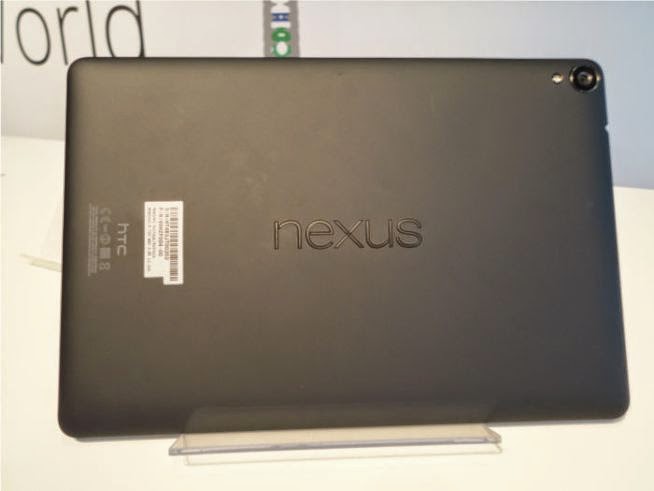
The 32GB LTE version of Google HTC Nexus 9 tablet is finally available on Amazon.in at a price of Rs 43,073. The Nexus 9 comes in two variants- 16GB (WiFi only) and 32GB (LTE) versions. The 16GB (WiFi only) model is available on Amazon.in at Rs 28,900. The Nexus 9 tablets do not come with a microSD card slots. 
The 32GB LTE verison comes with a nano SIM card slot. However, it is meant for mobile Internet data only. Users cannot make calls with it. The 32GB variant offers around 25GB of usable storage.

Image Gallery :
 
Review:

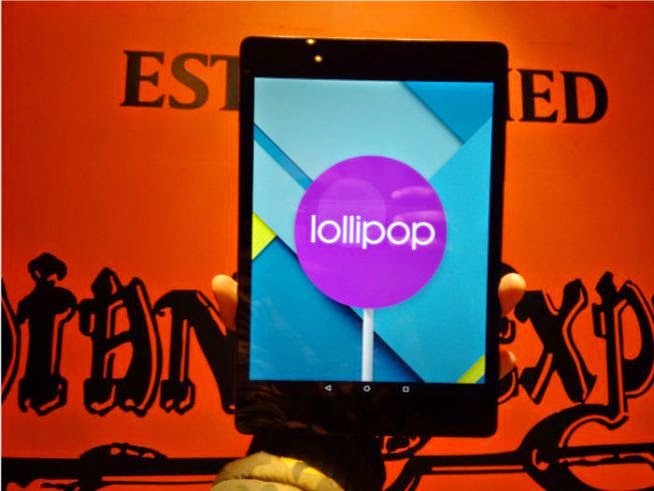
Google Nexus 9 made by HTC is at present the only tablet in India which runs Android Lollipop OS. The Nexus 9 was recently released in 16GB (WiFi only) and 32GB (LTE) versions. But only the 16GB (WiFi only) model is available on Amazon.in at Rs 28,900, while the 32GB model is marked as “coming soon” on Google Play at Rs 44,900. Before the tablet becomes easily available in India, we tell you whether you should consider buying the 32GB (LTE) variant.

Design: The Nexus 9 sports a very minimalistic look. The front is totally covered with Corning Gorilla Glass 3 while the rear has a rubberised plastic finish which ensures good grip. The device is slim and light. You will need to use two hands to use this device. The build quality is good and users shouldn’t have any complains apart from the power/wake and volume rocker buttons which are a bit difficult to use as they are not that raised.

Display: The Nexus 9 sports an 8.9-inch QXGA IPS LCD offering a resolution of 2048×1536 pixels at 320 ppi and 4:3 aspect ratio. The display quality is sharp and clear. However, the screen is best at full brightness. In medium brightness, it appears surprisingly dull. The little backlight bleeding (excess light) around the top edge of the screen can be ignored. Outdoor visibility is decent at full brightness. HTC could have included an anti-reflective coating, given the price. The 4:3 aspect ratio of the screen wastes a lot of real estate while watching movies. Still, the display will satisfy most users.

Performance: The tablet is powered by a 2.3GHz dual-core 64-bit NVIDIA Tegra K1 Denver CPU with 2GB RAM. It scored a good 35375 on AnTuTu Benchmark (v5.5). Overall, the device is smooth and offers decent multi-tasking capabilities. I don’t prefer playing games on tablets, but it is well equipped to handle heavy ones.

Stock Android Lollipop offers a refreshing new look. Android 5.0 doesn’t have a Gallery drawer. So, everything is cluttered under Photos. The new Android OS has totally been redesigned and it’s great.
On the multimedia front, the dual front speakers powered by HTC BoomSound do a good job. The overall experience was good. Performance wise, the Nexus 9 will impress you.

Camera:
The Nexus 9 comes with an 8MP rear camera with flash and a 1.6MP front camera. The quality of the front camera is good enough to make video calls. The quality of the rear camera is great in daylight. However, in low lighting situation, the images are grainy. Overall, the camera is satisfying as tablets are not primarily meant to take great images.
Storage: The 32GB variant offers around 25GB of usable storage. Of course, there is no memory card slot. USB OTG is not supported in the Nexus 9. You will have to rely on cloud storage- Google Drive, Dropbox, etc for extra memory or invest in a wireless flash reader.

Connectivity: The 32GB LTE version comes with a nano SIM card slot. However, the SIM card can be used only for mobile data- 4G, 3G and 2G. You cannot make calls on the Nexus 9. Other connectivity options include NFC, WiFi, Bluetooth, micro-USB 2.0 and 3.5mm audio port.

Battery: The tablet is powered by a 6,700mAh battery. On heavy usage with WiFi at 80 per cent brightness, the device lasts an entire day. On standby, the device lasts for three days.

Verdict: The Nexus 9 is an impressive Android tablet for regular usage and Lollipop makes it a sweeter deal. However, should you actually invest more money in buying the 32GB version? To me, spending Rs 16,000 more (initial price of Rs 44,900) for around 14GB extra usable storage and a SIM card slot for only data makes little sense. At this price, the iPad Air 2 64GB WiFi only model is a better deal at Rs 40,900 thanks to a bigger and better 9.7-inch display. And as far as the SIM card slot is concerned, if you cannot make calls, you can live without it. You can always connect via your mobile hotspot or WiFi. If the pricing remains the same when it is available in India, then buying the Nexus 9 16GB makes more sense- that is, if you want an Android Lollipop tablet. Else, opt for an iPad.

Specs:
  • 8.9-inch IPS LCD, 4:3 aspect ratio, QXGA (2048×1536), Gorilla Glass 3
  • Android 5.0 Lollipop OS
  • 2.3GHz dual-core 64-bit NVIDIA Tegra K1 Dual Denver
  • 192-core Kepler GPU
  • 2GB RAM
  • 25GB user memory (not expandable)
  • 8MP rear camera and 1.6MP front camera
  • nano SIM card slot for mobile data only
  • 4G, 3G, 2G
  • NFC
  • Bluetooth 4.1, WiFi
  • 6,700 mAh battery

New Product Launched : Intex Aqua Star L Launched As 'First Android 5.0 Lollipop Phone By Indian Brand'

Intex has launched its first Android 5.0 Lollipop-based Aqua Star L, priced at Rs. 6,990. The smartphone will be available in Black and White colours starting Monday exclusively via Snapdeal. The company touts that the Intex Aqua Star L is the "first Android 5.0 Lollipop smartphone by an Indian brand." To be noted however, is that Xolo recently provided Android 5.0 Lollipop updates for two of its smartphones in India.
The Aqua Star L is a dual-SIM (GSM+GSM) smartphone featuring a 5-inch (480x854 pixels) FWVGA IPS display. It is powered by a 1.3GHz quad-core (unspecified chipset) processor coupled with 1GB of RAM.

It comes with 8GB of inbuilt storage, which is further expandable via microSD card (up to 32GB). It sports an 8-megapixel rear camera with LED flash, while there is a secondary 2-megapixel front-facing camera also on board.

On the connectivity front, the Aqua Star L offers 3G, GPRS/ EDGE, Wi-Fi 802.11 b/g/n, Micro-USB, and Bluetooth options. The smartphone packs a 2000mAh battery. It weighs 130 grams.

Commenting on the launch, Sanjay Kumar Kalirona, Mobile Business Head, Intex Technologies said, "Our newest offering in the Aqua collection, the Aqua Star L, proves Intex's dedication to remain a technology supernal. It is absolutely imperative to run along with the technological advancements to stay in a competitive environment. Looking at the demand, the smartphone has been instilled with a 12.7 cm (5-inch) fully laminated screen and an 8-megapixel camera along with various features. We are excited to bring Intex's latest phone to our customers."

Earlier this week, Intex launched the Aqua X, which was listed on the company's site at a price of Rs. 2,699. Prior to this, the Indian domestic handset maker launched the Intex Aqua Power HD for the Indian market, apart from listing the Intex Aqua 5X and Aqua 3G Star on its website.

New Product Launched : Cube i6 Air 3G Tablet Includes Both Windows 8.1 And Android 4.4 For $230

While the market has been flooded with Android and Windows tablets of all descriptions in recent months, very few of these devices are equipped to run both operating systems together. Indeed, the demand for that capability is arguably pretty small, but there are some users out there who demand it.

A new tablet from one of China's most popular tablet brands, Cube, may be just what such buyers are looking for, offering a decent set of specs in a sleek and light package. Weighing 525g, and with a body that's just 8mm thick, the Cube i6 Air features a dedicated 'OS Switch' button, which allows the user to go from Windows to Android and back. 
However, the two operating systems cannot run concurrently, so you'll have to reboot the device every time you make the switch.

That's a bit of a hassle, but one nice feature of the i6 Air is its 9.7-inch display, which has a 4:3 aspect ratio with QXGA (2048x1536px) resolution. Other key specs include:
  • Quad-core 1.8GHz Intel Atom Z3735F processor
  • 2GB RAM
  • 32GB storage (plus microSD support up to 32GB)
  • 5MP rear camera with auto-focus
  • 2MP front-facing camera
  • Bluetooth 4.0
  • GPS
  • Wi-Fi 802.11 b/g/n
  • 8000mAh battery
Another very welcome feature is integrated 3G connectivity - quite an impressive addition to the spec list, given that many far more expensive tablets don't offer this support.
If all this sounds a bit too good to be true, we wouldn't blame you for thinking that it is. But the folks over at Liliputing had a chance to get their hands on the Cube Air i6 and take it for a spin, confirming that it is a real, working device (although for some reason, it only had a pre-release version of Windows 8.1 on the demo model they tried...).

It's available to buy now from Geekbuying.com, where it's currently on sale for just $232.99 - but that price will only be available for the next few days, after which it will head back up to its regular price of just under $356.

New Product Launch : Xiaomi Mi 4 64GB Model To Land In India On February 24 For Rs 23999

If you were holding back from buying the 16GB Xiaomi Mi 4 smartphone in anticipation of the 64GB model, the company has announced that the higher capacity version is all set to make its debut in India. The handset will go on sale from February 24 and it’ll carry a price tag of Rs 23999.

The 16GB Xiaomi Mi 4 is one of the cheapest flagship phones on the market, but it does have a few downsides. Firstly, the internal memory is all you get as there’s no microSD card slot and you’ll have to rely on external accessories such as USB OTG for connecting storage devices. And out of 16GB, just about 12GB is available for hoarding content.
That certainly isn’t enough for most users and brings the need for a higher storage model. The difference in retail amounts between the 16GB and 64GB options is Rs 3000 which is pretty reasonable, but the 5.5-inch OnePlus One does have the upper hand here since it offers the same 64GB storage and at Rs 21999. What gives Xiaomi’s handset the advantage is that it comes in a compact design which is easy to use in a single hand.


The Mi 4 features a metal frame with a 5-inch 1080p display fitted on the front. There are dual high-quality Sony cameras onboard as well, with an 8MP selfie shooter and a 13MP main imager. Additionally, the phone offers 3GB RAM and a 3080mAh battery with quick charge support.

Xiaomi Mi 4 specs roundup:

– 2.5GHz quad core Snapdragon 801 SOC
– 3GB RAM
– 16GB/64GB non-expandable storage
– Android 4.4 KitKat w/ MIUI V6
– 13MP rear camera, 8MP front shooter
– 3080mAh battery

The 64GB Xiaomi Mi 4 smartphone will also be exclusive to Flipkart and you can expect to see limited stock on February 24.

New Application Update : WhatsApp Nervous About Free Voice Calling Feature Launch In India

WhatsApp is testing its free voice calling feature through a small number of people in India, possibly having sped up this launch to meet Hike’s challenge. But there’s not much reason for the former to worry about seeing as its second largest user base resides on these shores, while the latter is still trying to catch up to it.

The free voice calling function appears to be available on invite-only basis at present. What this means is that you have to get a call through WhatsApp from someone who already has it. The release has been restricted to Android users for now and is reported to be accessible through the newest version 2.11.508 of the messenger app. 
The software update is not available through Google Play Store, but can be downloaded as an APK file via the official WhatsApp website section for Android. The news and images were picked up by GSMArena through a Reddit member dubbed pradnesh07 who was able to use it on a Nexus 5 smartphone running on Android 5.0 Lollipop.

According to the tipster on Reddit, some people started seeing the VoIP feature merely after picking up a voice call made through WhatsApp and then restarting. But some folks may have to reinstall the application before being able to enjoy free voice calling. The invite-based launch makes it clear that things are being taken slowly.

If you’ve miraculously or accidentally been treated to WhatsApp’s voice calling function, then you will notice an icon for it beside the Chats and Contacts tabs. But for some, trying to dial up a contact using the free VoIP calling option is said to only bring up a list of apps through which the call can be placed, including Google’s stock dial-pad.
Telecom companies across India are already acting like cry babies over the fact that customers are showing increasing preference for web-based applications like WhatsApp, Skype, Line and Viber to communicate with others. They’ve taken up the issue of regulating such Internet-based services with TRAI in order to staunch the loss of SMS and voice revenues.

It’s possible that this is one reason for WhatsApp having released the free voice calling feature in a limited way. It will also give the company time and feedback, both which will be needed to iron out any noisome bugs.

News Productd Launched : New Motorola Moto G 4G Launched In Brazil

We have been hearing rumors about the Motorola Moto G 4G since November of last year, and now Motorola has launched the handset in Brazil.

The new Motorola Moto G 4G is now available to buy direct from Motorola in Brazil, the handset features the same specifications as the existing Moto G. 
The Moto G 4G is equipped with 1.2GHz quad core Qualcomm Snapdragon processor and it features 1GB of RAM, the device also comes with 16GB of included storage.

Other specifications on the new Motorola Moto G 4G include a 5 inch HD display with a resolution of 1280 x 720 pixels, the handset also comes with front and rear facing cameras.

On the front of the device there is a 2 megapixel camera on the back there is an 8 megapixel camera with an LED flash. The handset comes with Android 4.4 KitKat and the device features dual SIM card slots.

A LTE-enabled variant of the Moto G (2014) has been circulating in the rumor mill for quite some time now and now it's finally become a reality. Motorola has apparently opted out of an official announcement and instead the new handset crept up on us and appeared on the manufacturer's Brazilian page and is already available to purchase.

The move was only logical since the first generation Moto G proved to be such a huge hit, both in emerging markets and even in places like the UK with the LTE upgrade only sweetening the deal even more. The budget-oriented, Moto G 4G (2015) offers a slick and clean almost pure-android experience just like its predecessors and comes with a few notable modifications over the base version. 
First and foremost Motorola has decided to stick with the dual-SIM setup and make it available in the 4G variant as well. The phone comes equipped with two micro SIM slots with presumably only one capable of LTE speeds. Other notable changes over the Moto G (2014) include a larger, 2,390mAh, battery which should compensate for the increased power consumption from the new modem. Onboard storage will be 16GB with no 8GB option available and physically the smartphone will retain its compact dimensions with only about 6g of extra weight due to the beefier battery.
 
The rest of the internals are unchanged. The handset is still powered by a quad-core Snapdragon 400 SoC, clocked at 1.2GHz, has the same 5-inch 720p display and the same camera setup - 8MP main and 2MP front-facing shooter. A small, but significant detail to note is that the new device will be shipping with Android 5.0.2 Lollipop, while previous Moto G phones are still mostly running 4.4 KitKat and despite Motorola's best wishes are still waiting on an update.

The new Moto G 4G (2015) can already be purchased from a Brazilian retailer for BRL 899, which is about $345. This definitely seems like a premium for a device that is supposed to be budget-oriented and it is. Brazilian handset prices are traditionally very high and not representative of what smartphones costs elsewhere.

Despite its inconspicuous arrival the new Moto G 4G (2015) has all the right ingredients to continue to legacy of its predecessor and if Motorola manages to keep costs low than the handset definitely has a bright future ahead of it.

New Upgrade Product Unveiled : Upgraded HTC Desire 816G With Octa Core Processor Unveiled

The HTC Desire 816G smartphone has already been available for purchase in India for a few months now, but you’ll soon be able to get hold of the upgraded version which packs a new processor and more memory. The handset has been officially launched for Rs 19990 which is just Rs 1000 more than what the previous model was priced at.

The new HTC Desire 816G smartphone comes with double the performance and this is made possible by dropping the old quad core processor for a 1.7GHz octa core chipset. The new SOC is most likely from MediaTek based on the Cortex A7 which is also found on the recently launched Desire 526G+. 
The company notes that the Desire 816G has been a ‘best buy’ in the big screen category, so it makes sense giving it an upgrade. Apart from throwing in a new ticker, the company has made no other modifications to the smartphone. So, you’ll basically be treated to the same gorgeous design with a large 5.5-inch 720p HD IPS display and BoomSound speakers on the front.

You’ll also sign up for Android 4.4 KitKat with the Sense UI and BlinkFeed on this HTC handset. Apart from these features, the phone comes with dual SIM card slots, 1GB RAM, 16GB expandable storage, a 5MP front snapper and a 13MP rear shooter. With the 2600mAh battery, you can expect up to 10 hours of 3G talk time.

Upgraded HTC Desire 816G specs:
– OS: Android 4.4 KitKat
– Display: 5.5-inch HD touchscreen
– Memory: 1GB RAM, 16GB expandable storage
– Chipset: 1.7GHz octa core
– Connectivity: Dual SIM, HSPA+, Wi-Fi b/g/n, GPS, Bluetooth 4.0
– Camera: 5MP front, 13MP rear
– Battery: 2600mAh


The new HTC Desire 816G smartphone will go on sale in India in the coming days.

New Product Leaked : Samsung Galaxy S6 Images Leaked, Expected To Be Launched In March 2015

News about the Galaxy S6 which Samsung is bound to launch soon, are flying in thick and fast as March approaches because the company has stuck to releasing devices in its flagship series at around the same time every year. Details on the build of the Samsung Galaxy S6 have also been outed thanks to an accessories maker.

First off, the upcoming Mobile World Congress set for March 2 to 6 in Barcelona is likely to host the unveiling of the Galaxy S6. It hasn’t been confirmed by official sources, but you can call it an educated guess. If this happens, then Samsung might wait a few weeks before releasing the smartphone so that the actual launch falls in the end of March, or early April at the latest.
Samsung has been criticized for its lack of innovation when its comes to its flagship handsets, with the sales of the Galaxy S5 having felt the full brunt of the company’s stagnant design decisions. An older story, complete with photos, had indicated that Samsung would roll out two versions of its most famous Galaxy lineup, though little evidence has been able to back the rumor.

Droid Life was the first to notice pictures of Spigen, having listed four cases for the Galaxy S6 on Amazon. This is not the first time the accessories brand has let loose images of what smartphones would look like before their official launches. The covers displayed on Amazon may be showing the real S6. Phone Arena has a picture of the device which is consistent with Spigen’s.
Accordingly, Samsung may be changing the positions of the camera, flash and heart rate sensor on the back panel. What’s more, the metal accents you’ve been begging for may actually arrive with the Galaxy S6. As for Samsung’s next flagship device embedding the Qualcomm Snapdragon 810 processor, the chances of this happening appear to be remote, going by the present scenario.

Tom’s Hardware says that Samsung is not happy with the Snapdragon 810 chipset since it seems to be causing an overheating problem. Qualcomm is supposedly willing to update the SoC just for the S6. But it’s possible that the mobile manufacturer will go with its very own Exynos 7 and LTE instead. Samsung’s processor may even offer a performance advantage over Qualcomm Snapdragon 810.
Although Samsung has kept it zipped up in terms of the specifications of the Galaxy S6, various rumors paint it with 4GB of RAM, a 20MP main camera, a 5MP front lens and a 5.2-inch to 5.5-inch 1440 x 2560p AMOLED display. Android 5.0 Lollipop OS is expected aboard the S6 and along with it, the Snapdragon 810 or 64-bit Exynos 7420 chip.

News Application Update : WhatsApp Free Voice Calling Feature Reportedly Starts Rolling Out

After rolling out the much-anticipated Web client to Android users, WhatsApp is now reportedly slowly rolling out the promised free voice calling feature - once again to Android users.

A Reddit user on Friday posted screenshots of the voice calling feature, supposedly accessible in the latest WhatsApp app (v2.11.508) for Android from the company site on a Google Nexus 5 running Android 5.0.1 Lollipop in India.

Reddit user pradnesh07 claims (via GSMArena) users who are running the aforementioned combination of WhatsApp app version, Android OS version, and device make will not be able to activate the voice calling feature until they receive a call from someone else with the feature already activated - hinting at a slow, almost invite-based rollout. 
The user further notes those who activate the WhatsApp voice calling feature in this manner - of receiving a call from someone with the feature already enabled - may not be able to use the feature to place further calls themselves.

To be noted before proceeding with a description of the UI seen in the screenshots, is that WhatsApp has yet to make any announcements about the rollout of voice calling to users, and that if reports are correct, the feature still appears to be in testing due to the very limited nature of the rollout. User pradnesh07 also claims to have been able to activate the feature only after receiving a WhatsApp call.

The screenshots show WhatsApp now features a new Calls tab on top, alongside Chats and Contacts, where users can start a call with one of their WhatsApp contacts via the 'New call' button on top, similar to the already-present 'New chat' button. Some users report that at this point, they are shown a list of apps including the Google dialler with which they can place the call, but no WhatsApp calling option.

Those with the feature fully working will supposedly see a standard calling interface, with the disconnect button above buttons for speaker, messages, and mute. Beyond call history visible on the Calls tab (not shown here as contact details were insufficiently blurred), no further screenshots were shared, of an in-call interface for example.

The WhatsApp voice-calling UI seen in the screenshots is mostly in-line with earlier screenshots from December that were supposedly found by digging around within the WhatsApp app for Android, but not yet functional.

Until a wider rollout of the feature, or WhatsApp's own announcements, we'd still recommend taking the reports with a pinch of salt. While the feature free voice calling feature has been promised for Q1 2015, and already has telecom operators pre-emptively looking to regulate with tariff measures, it's possible it may actually roll out globally in a slightly different form.

New Product Release Plan : Xiaomi To Release MIUI 6 Update For Mi 3 And Redmi Series Soon

At the launch event of Xiaomi Mi 4 smartphone in New Delhi, the company also announced that its latest MIUI 6 based on Android 4.4.4 KitKat will reach all its smartphones by March. The Mi 3 and Redmi Note 4G will get the update in early February while the Redmi 1S and Redmi Note 3G will get it by March. The new Mi 4 smartphone already comes with MIUI 6. 
The new MIUI 6 user interface aims to simply the experience for its users and offers customisable- notifications, aicons, lock styles- auto Email setup along with several new themes.

The new MIUI comes with a built-in security center which is powered by technologies from Tencent,

Kingsoft and LBE. It aims to protect privacy and claims to optimise battery and data usage. It also allow users to mark or block unwanted calls with several detailed options.

New Product Launch Report : Asus ZenFone C ZC451CG With Android 4.4 KitKat Launched

Asus has reportedly launched a new smartphone, the ZenFone C, in Malaysia. No official announcement has been made by the company as yet, and availability details are not known either.

The ZenFone C may represent the first of the series that replaces the existing ZenFone 4 lineup in the future. It is worth noting that the specifications of the newly announced Asus ZenFone C ZC451CG are similar to that of the ZenFone 4 A450CG but with minor upgrades. 
The dual-SIM Asus ZenFone C ZC451CG runs on Android 4.4.2 KitKat OS with Zen UI out-of-the-box with no word on the smartphone's Android 5.0 Lollipop update. It features a 4.5-inch FWVGA (480x854) IPS display. The smartphone is powered by the same 1.2GHz dual-core Intel Atom Z2520 processor with Hyper-Threading Technology (2 cores, 4 threads, 1MB cache) and 1GB of RAM as seen in ZenFone 4 A450CG. It also includes a 5-megapixel 'PixelMaster' rear autofocus camera with flash and f/2.0 lens, apart from a 0.3-megapixel front-facing camera with f/2.8 lens, according to the specifications sheet shared on Twitter by the SoyaCincau blog (via Android Headlines).

It also shares the same inbuilt storage specification of 8GB, which is expandable via a microSD card (up to 64GB). Other specifications of the Asus ZenFone C ZC451CG include 3G, Wi-Fi 802.11 b/g/n, Bluetooth 4.0, A-GPS, Glonass, and Micro-USB connectivity options. The smartphone however differs from the ZenFone 4 when it comes to battery. As compared to the ZenFone 4 A450CG's 1600mAh battery, the new ZenFone C sports a better 2100mAh battery. The smartphone is said to be available in Black, White and Red colour variants.

Measuring 136.5x67x10.9mm and weighing 149 grams, the ZenFone C ZC451CG is said to be priced at MYR 349 (roughly Rs. 6,000). The availability details of the handset outside Malaysia are not yet known.

New Product Update : Asus ZenFone C ZC451CG With 4.4 KitKat OS May Come

I am sure this is going to be a bigger hit in the Indian market than many of the recently launched handset. This is because the handset comes with so many attractions that it is simply irresistible.

To be true for an average Indian smartphone maven, this handset comes with everything that is just right. You don’t need to compromise to get the best. It is going to satisfy even many people who were searching for a much costlier handset. Now these people will ultimately fall for it. 
The handset seems to be a major upgrade of ZenFone 4 lineup. The handset’s specifications are far superior compared to the previous version. While the ZenFone 4 A450CG was a massive hit in the Indian market, this one is going to be a bigger success in the coming days.

As far as operating system is concerned, the latest handset from the Taiwanese tech giant comes with Android 4.4.2 KitKat out-of-the-box. Asus ZenFone C ZC451CG comes with an impressive 4.5-inch FWVGA (480×854) IPS display. When it comes to processor the handset seems to have come with the right processor. It has 1.2GHz dual-core Intel Atom Z2520 processor with Hyper-Threading Technology (2 cores, 4 threads, 1MB cache) and 1GB of RAM. Though the camera may be a disappointment for many. It comes with 5-megapixel ‘PixelMaster’ rear autofocus camera with flash and f/2.0 lens, apart from a 0.3-megapixel front-facing camera with f/2.8 lens.

When it comes to internal storage, the handset comes with 8GB storage that can be expanded upto 64GB with microSD card. Media options of the handset include 3G, Wi-Fi 802.11 b/g/n, Bluetooth 4.0, A-GPS, Glonass, and Micro-USB connectivity options. Its battery is much more improved compared to its predecessor. It has 2100mAh battery. The handset is expected to be priced in India at around 5999.

OS Update : Google Responds To Concerns Over Widespread Android WebView Vulnerability

Google has issued a statement regarding the recently reported WebView security flaw that affects devices running Android 4.3 Jelly Bean and older versions, a flaw that potentially puts over 900 million users at risk. The statement is essentially a follow-up to the Android security team's earlier response that it is up to OEMs to address the issue, and that the company has already addressed the issue with the release of Android 4.4 KitKat and Android 5.0 Lollipop.

For those who are unaware, WebView is a part of the Android OS that lets app developers render webpages in apps without requiring a full browser. The component was based on the Webkit engine, which was replaced by Google's Chromium engine when Android 4.4 KitKat launched, resolving the reported vulnerability in WebView and also enabling quick binary updates to the component via OEM updates. Android 5.0 Lollipop then unbundled WebView from the operating system, allowing it to be downloaded and updated separately by users from Google Play - without requiring an OEM fix. 
Adrian Ludwig, from Google's Android security team, in a Google+ post on Friday says Google issues bug fixes to the current version of Android on the Android Open Source Project (AOSP) page, and directly provides patches "Android partners with patches for at least the last two major versions of the operating system."

Ludwig said that improving WebView and browser security is one of the areas where the company has made the "greatest progress", detailing the changes made with Android 4.4 KitKat and Android 5.0 Lollipop. He added that it is no longer feasible to update more than 2-year-old versions of WebView, which has more than 5 million lines of code and has seen hundreds of new 'commits' a month from developers since then. Ludwig says it is up to the OEM to issue an update for the issue, ideally by updating the devices running on OS versions older than Android 4.3 Jelly Bean to Android 4.4 KitKat.

Users of Android 4.3 Jelly Bean and older devices can stay safe and unaffected by WebView bugs, Ludwig points out, by using browsers that have their own rendering engine, like Firefox or Chrome. "Using an updatable browser will protect you from currently known security issues, and since it can be updated in the future it will also protect you against any issues that might be found in the future," Ludwig added on his Google+ post.

It is the apps that open the web pages in their own inbuilt browser, which are vulnerable. Users can get rid of these apps or disable the inbuilt browser option from inside the app. Ludwig, for developers, added that they too can contribute in avoiding the WebView bug by following Google's "security best practices" and by making sure only trusted web pages with 'HTTPS' open in their applications.

To add some context, Google's latest distribution data of different versions of Android has revealed that Android 5.0 Lollipop, the latest publicly available version of Google's mobile and tablet operating system, is powering less than 0.1 percent of Android devices while Android KitKat has a total share of 39.1 percent. The distribution data of different versions of Android also revealed that Android Jelly Bean still powers the greater part of Android devices, with a combined percentage of 46 percent.

Interestingly, Google a company that says it will not be able to rollout a fix for the WebView bug to the majority of Android users has been lately publishing the OS security flaws of Microsoft and Apple, albeit after giving them 90-days to provide bug fixes. According to the latest report, Google has revealed two new flaws in Apple's OS X operating system. The search giant recently also revealed a number of security holes in Microsoft's Windows 7 and Windows 8.1 OS versions, despite Microsoft's request to hold off for a few days until the patch was rolled out.
 
Support :. Copyright © 2015. The Technology Zone - All Rights Reserved
Template Created By Gourav Kashyap Proudly Powered By Blogger