Featured Post Today
print this page
Latest Post
Showing posts with label 2013. Show all posts

News Microsoft Windows Update : The Operating Systemels Evolution Of Microsoft Windows Through Out The Years

Microsoft Windows has seen ten major versions since its first release in 1985. Over 30 years, Windows evolved to look very different while retaining a degree of familiarity.
The evolution of Windows is both a reflection on computing power of that generation and the dominant input devices, be it a mouse and keyboard earlier and a touchscreen now.

Here’s a brief look at the history of Windows:

Windows 1
http://www.hindustantimes.com/Images/popup/2015/7/Windows-1.jpg

The original. This is where it all began. The original Windows 1 was released in November 1985 and was Microsoft's first attempt at a graphical user interface.

Windows 1 ran on top of the then dominant operating system, Microsoft's DOS, which relied on command-line input. Windows 1 was one of the first software to heavily rely on mouse control before the mouse was a common input device.

Windows 2
http://www.hindustantimes.com/Images/popup/2015/7/Windows-2.jpg

Arriving two years after the release of its predecessor in December 1987, Windows 2 introduced features like the ability to minimise or maximise windows and allowing different windows to overlap each other. Windows 2 introduced the control panel, where system settings and configuration options resided. It also introduced the world to Microsoft Word and Excel.

Windows 3
http://www.hindustantimes.com/Images/popup/2015/7/Windows-3.jpg

Windows 3 launched in 1990 and was the first version of the OS to see widespread success and be considered a challenger to Apple’s Macintosh and the Commodore Amiga graphical user interfaces, coming pre-installed on computers from PC-compatible manufacturers.

It introduced the ability to run MS-DOS programmes in windows, which brought multitasking to legacy programmes, and supported 256 colours, bringing a more modern, colourful look to the interface.

It also introduced the world to one the most iconic timesink ever created, Solitaire.

Windows 95
http://www.hindustantimes.com/Images/popup/2015/7/Windows-95.jpg

Windows 95 launched in August 1995 and brought with it the start button and start menu.

Its big push was “plug and play” – connect a peripheral and the operating system finds the appropriate drivers for it and makes it work. That did not pan out as expected and led to millions of “plug and pray” jokes.

Internet Explorer too made its debut on Windows 95.

Windows 98
http://www.hindustantimes.com/Images/popup/2015/8/Windows-98.jpg

Released in June 1998, Windows 98 built on Windows 95 and came with Internet Explorer 4, Outlook Express, Microsoft Chat and eventually Windows Media Player.

It introduced the back and forward navigation buttons and the address bar in Windows Explorer, among other things.

USB support was much improved in Windows 98 and led to its widespread adoption, including USB hubs and USB mice.

Windows ME
http://www.hindustantimes.com/Images/popup/2015/7/Windows-ME.jpg

Released in September 2000, Windows Millennium Edition (ME) was the last Windows to be based on MS-DOS, and the last in the Windows 9x line.

Considered the worst version of Windows ever, ME was the consumer-aimed operating system twinned with Windows 2000 that aimed at the enterprise market. It introduced some important concepts to consumers, including more automated system recovery tools.

IE 5.5, Windows Media Player 7 and Windows Movie Maker all made their appearance for the first time. Auto-complete also appeared in Windows Explorer, but the operating system was notorious for being buggy, failing to install properly and being generally poor.

Windows 2000
http://www.hindustantimes.com/Images/popup/2015/8/Windows-2000.jpg

The enterprise twin of ME, Windows 2000 was released in February 2000 and was based on Microsoft’s business-oriented system Windows NT that later became the basis for the much more successful Windows XP.

Windows 2000 was the first time that Microsoft offered automatic updates and it was the first Windows to support hibernation.

Windows XP
http://www.hindustantimes.com/Images/popup/2015/7/Windows-XP.jpg

Released in October 2001, Windows XP was a product of a Microsoft at the peak of its powers.

The start menu and task bar got a visual overhaul, bringing the familiar green start button, blue task bar and vista wallpaper, along with various shadow and other visual effects.

Windows XP was the longest running Microsoft operating system, seeing three major updates and support up until April 2014 – 13 years after its original release. Windows XP was still used on an estimated 430 million PCs when it was discontinued.

But its huge popularity turned out to be a boon for hackers and criminals, who mercilessly exploited its flaws, especially in Internet Explorer.

Windows Vista
http://www.hindustantimes.com/Images/popup/2015/7/Windows-Vista.jpg

Windows XP was replaced by Windows Vista in January 2007. Vista updated the look and feel of Windows with focus on transparent elements and search and security. Its development was long and troubled, with ambitious elements abandoned in the final release.

It was buggy and burdened the user with hundreds of requests for app permissions under “User Account Control” – the outcome of XP’s security problems. It also ran slowly on older computers despite them being deemed as “Vista Ready”.

Windows Media Player 11 and IE 7 debuted, along with Windows Defender, an anti-spyware programme. Vista included speech recognition, Windows DVD Maker and Photo Gallery, and was the first Windows to be distributed on DVD.

Windows 7
http://www.hindustantimes.com/Images/popup/2015/7/Windows-7.jpg

Windows 7 was released in October 2009 following the lukewarm response to the buggy Windows Vista. It was intended to fix all the problems and criticism faced by Vista, with slight tweaks to its appearance and a concentration on user-friendly features and less “dialogue box overload”.

It was faster, more stable and easier to use, becoming the operating system most users and businesses would upgrade to from Windows XP, forgoing Vista entirely.

Windows 8
http://www.hindustantimes.com/Images/popup/2015/7/Windows-8.jpg

Released in October 2012, Windows 8 was Microsoft’s most radical overhaul of the Windows interface. In an effort to bring Windows into the post-PC world dominated by touchscreen smartphones and tablets, Microsoft ditched the start button and start menu for a more touch-friendly start screen.

The new tiled interface saw programme icons and live tiles, which displayed information normally associated with “widgets”, replaced the lists of programmes and icons. A desktop was still included, which resembled Windows 7.

The radical overhaul led to a fallout with loyal Windows users. Microsoft's attempted to walk a fine line between touchscreen support and the traditional mouse and keyboard and somewhat failed on both fronts.

Windows 10
http://www.hindustantimes.com/Images/popup/2015/8/Win10.jpg

Released on July 29, 2015, Windows 10 is a sharp U-turn from its predecessor, bringing back the start menu and more balance to traditional desktop computer users.

It was released as a free upgrade to all users with legitimate copies of Windows 7 and Windows 8.1.

A major feature called Continuum introduced the ability to switch between a keyboard and mouse mode and a tablet mode, for those computers like the Surface Pro 3 with a detachable keyboard.

In an effort to recapture the web browser market it ceded to Google Chrome, Windows 10 comes with a new browser called Edge, which allows users to annotate web pages, save them to read later, or select "read mode" to strip out adverts and sidebars.

Windows 10 comes with Microsoft's virtual personal assistant, Cortana, which pops up with notifications and suggestions, and learns the user's preferences over time. Cortana responds to voice commands similar to Apple's Siri and has been touted as one of the core features of Windows 10.

New Leak Reveals Dual-SIM Samsung Galaxy Note 3 With Snapdragon 800 SoC

Samsung’s latest phablet offering, the Galaxy Note 3, was unveiled only recently. The short time frame hasn’t stopped the company from talk about a dual-SIM variant of the device. And according to GSM Insider, such a device is indeed in the works. Before building up expectations, it is necessary to state that the new phablet offering will be hitting the Chinese market for now. There is still no word about an India launch for the variant.

The leak also came with a bunch of photos of the SM-N9002 model, as Samsung is calling it. The most important piece of information revealed from the leak suggests that the dual-SIM Galaxy Note 3 will come with a Snapdragon 800 SoC sporting four 2.3GHz Krat 400 cores and an Adreno 330 GPU under the hood. The variant was even put through an AnTuTu benchmark resulting in a score of 31,276, which is pretty impressive if confirmed. While the variant still falls slightly short of the standard Galaxy Note 3 benchmark scores, according to the source, it is still too early to say if this will affect its overall performance.     
Samsung, from what has been heard so far, will be launching four variants of the Galaxy Note 3 in China. All the information gathered so far suggests that all four models will be available for China Unicom. China Mobile, however, will be getting the Galaxy Note 3 SM-N9008 while China Telecom will be rolling out the Galaxy Note 3 SM-N9009 variant. All told, this seems to be good news for the Chinese Note lovers.

The source states that there will be no real difference between the Galaxy Note 3 SM-N9002 model and the international version of the phablet, apart from the second SIM slot. The N9002 model will come with the same 5.7-inch 1080p display, 13-megapixel camera and run Android 4.3 Jelly Bean.

iPhone 5S To Include Fingerprint Scanner : WSJ

While we count down the hours to the much-awaited launch of Apple’s newest iPhones, more leaks and confirmations are coming in hard and fast regarding the specifications. The biggest feature of the anticipated launch has been the fingerprint scanner and it looks like the more expensive of the two handsets slated to be launched tonight will be home to it.

Rumours about the fingerprint scanner in the iPhone 5S have been doing the rounds of the tech circles for quite some time now, but The Wall Street Journal, ahead of the Tuesday event has more or less confirmed the feature. According to the report, the fancy feature will be a part of only the iPhone 5S and not the rumoured low-end iPhone 5C. 
The report is backed up with references to hardware of this sort that had been found in the beta version of iOS 7. A leak by developer Hamza Sood contained codes of a setup process that made a reference to a biometric scanner located within iPhone’s home button. The description of the sensor showed users placing their fingers on the iPhone’s Home button and seeing an image of a thumbprint in changing colours.

While the technology of fingerprint recognition has been an often visited one by tech companies in order to avoid the need to remember passwords, it hasn’t quite been done right yet. The report by WSJ now notes that newer technology allows for devices to take multiple scans with the finger held in one place, thereby increasing reliability of the readings compared to older technology.

The Cupertino based company will be adding the fingerprint scanner on the more expensive of the two devices, the iPhone 5S, which will by far be the most high-profile consumer electronic device to be home to a fingerprint scanner. The key to widespread public adoption is touted to be the technology’s reliability and ease of use.

Apple’s event is all set to be held tonight at its Cupertino headquarters and will see the launch of the iPhone 5S and iPhone 5C.

Nokia Lumia 1520 Leaks Give Us A Closer Look At The Phablet

 
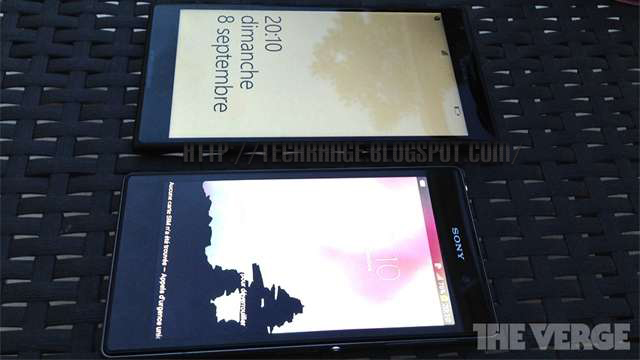
New leaks have popped up that give us a closer look at the Nokia Lumia 1520, which, as you might recall from earlier rumours, is going to be a 6-inch phablet that runs on Windows Phone 8. The leaks come courtesy of The Verge, and give us a bunch of pictures of the phablet, especially in comparison to some other devices, such as an Android-based Sony Xperia device. 
According to the leak, the phablet will have 2GB of RAM, a 6-inch 1080p display, 32GB of storage and a microSD card slot. All of this is said to be powered by a quad-core Snapdragon 800 processor from Qualcomm. Going by the pictures, the phablet will be running on an upcoming version of Windows Phone 8 that will allow the addition of an extra column of live tiles. The back side of the smartphone will have a bump, much like the one we saw on the Lumia 925. 
So far, the smartphone has been referred to as its development name—Bandit. According to these pictures and earlier leaks, it is possible that the Nokia Bandit will be the first Windows Phone to come with a full HD display. Also thrown in is a 20-megapixel PureView camera, according to Windows Phone Central. Other features also expected are a quad-core Snapdragon SoC as well as Windows Phone 8 GDR3 for the new 1080p support.

Along with this, Nokia has also been rumoured to be working on a tablet running on Windows RT, which has been referred to by its development name—Sirius.

Top News This Week : Microsoft Buys Nokia; Galaxy Note, Gear Announced; Android 4.4 Named Kit Kat And More!

We understand that it is a busy week and it's really hard to keep track of everything that goes on in the tech world. So here’s a handy recap of the top news stories this week.

Microsoft buys Nokia's devices and services unit for $7.2 billion :
In what is the biggest story of the year so far, Microsoft has purchased substantially all of Nokia’s devices and services business, and license and use of the company’s patents and mapping services. The deal is expected to close in the Q1 of 2014 and is subject to approval by Nokia’s shareholders, regulatory approvals and other closing conditions. Under the terms of the agreement, Microsoft will pay 3.79 billion euros to purchase the Finnish company’s devices and services business, and 1.65 billion euros to license Nokia’s patents, for a total transaction price of 5.44 billion euro (approx $7.2 billion) in cash. 

Samsung Galaxy Note 3 officially announced :
The much-awaited Galaxy Note 3 is finally official.The design of the phablet has been tweaked a bit, with the smartphone coming with a leather back panel. The Galaxy Note 3 also seems to sport stiched accents. The Galaxy Note 3 comes with a 5.7-inch full HD Super AMOLED display with a pixel resolution of 1920 x 1080, giving it a pixel density of 386ppi. Samsung has come up with two variants of the phone, each coming with a different processor under the hood. The first variant comes with an improved version of the company’s Exynos 5 Octa chip clocked at 1.9GHz, which packs an ARM Cortex-A15 chip with a more power-friendly Cortex-A7. The second version comes with Qualcomm’s latest Snapdragon 800 SoC, with four cores clocked at 2.3GHz. The latter is aimed at LTE markets.

Stephen Elop to head Microsoft's Devices team :
According to a company-wide email sent by Microsoft boss Steve Ballmer, Stephen Elop will be heading an expanded Devices team, which includes the company's current Devices and Studios teams. Currently handling the Xbox side of things is Julie Larson-Green, but she will be working directly under Elop once the Nokia acquisition by Microsoft is complete. According to Ballmer's email, "Julie Larson-Green will continue to run the Devices and Studios team, and will be focused on the big launches this fall including Xbox One and our Surface enhancements. Julie will be joining Stephen’s team once the acquisition closes, and will work with him to shape the new organization."

LG G2 slated for a late September launch in India :
According to our sources from LG, the G2 is likely to pave its way into the Indian market by the end of September or early October, right in time for the Diwali shopping season. It will be competing with the Galaxy S4 and the HTC One. The smartphone is sleek at 8.9mm and runs on Android Jelly Bean 4.2.2. It features a large 5.2-inch full HD display and employs Graphic (GRAM) technology that reduces the display’s energy use by up to 26 percent on a still frame. Under the hood, it is powered by a 2.26GHz Qualcomm Snapdragon 800 SoC featuring four Krait CPUs along with 2GB of RAM. The G2 also gets a 3000mAh battery. The smartphone had also grabbed eyeballs for its design that doesn’t feature any buttons on the edges as the volume and power buttons are placed at the back. The LG G2 smartphone will be available in black and white.

Qualcomm announces the Toq smartwatch featuring Mirasol display and wireless charging :
At its annual Uplinq Developer Conference, Qualcomm announced that its subsidiary, Qualcomm Connected Experiences will release a Qualcomm branded smartwatch towards the end of the year. The Qualcomm smartwatch dubbed Toq was showcased at the event by Paul Jacobs, Chairman and CEO of Qualcomm. The Toq is expected to be a second display for your Android smartphone which will connect via Bluetooth (compatible with Android 4.0.3 and above). Support for iOS expected in the future.  

Samsung unveils Galaxy Gear smartwatch; only compatible with Galaxy smartphones :
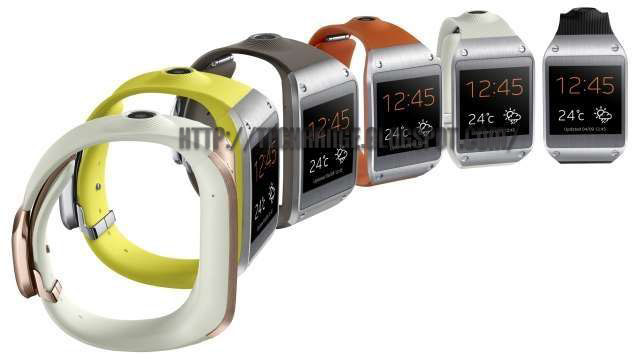
Samsung has finally shown its first steps into the wearable computer space. The company unveiled the Galaxy Gear smartwatch, which, sadly enough, will only work with Samsung’s current crop of high-end smartphones. At launch, it will only work with the Galaxy Note 3, but the Galaxy S4, S3 and Note 2 will be getting software updates for Galaxy Gear support.The Galaxy Gear is capable of showing users notifications that could otherwise only be seen on the phone. These notifications include incoming messages, calls, texts, emails and alerts. It shows a preview of these notifications and lets users accept or dismiss them right from the Gear. It also has the Smart Relay feature, which opens the content of the notification on the smartphone as soon as it is pulled out of the pocket. The Gear is primarily used by either using the swipe-based interface or Samsung’s S Voice feature. 

Indian engineer receives $12,500 in bounty for exposing image-deleting Facebook bug :
21-year old Indian Electronics and Communications Engineer, Arul Kumar received $12,500 bounty after reporting a Facebook bug that allowed one to delete an image on a page without any interaction from the user. Researcher Arul Kumar posted a blog about how easy it was to exploit the Facebook Support Dashboard and delete any image from any page, including verified ones. Kumar detailed the bug, deemed critical, and sent across a video to Facebook’s security team.

Bharti Airtel in talks to acquire Loop Mobile :
Mumbai-based Loop Mobile, whose owners want to quit the telecom sector, is in talks with Bharti Airtel for an acquisition. Bharti Airtel is the leading bidder in the race. The final deal will depend upon the clarity on guidelines set by the government for mergers and acquisitions. It would also depend upon the renewal fee as Loop’s license is set top expire in September next year.

Sony Xperia Z1 with 20.7-megapixel camera and Snapdragon 800 is official :
Sony unveiled its imaging-centric smartphone, the Xperia Z1. Once again built around the same OmniBalance design principles first seen in the Xperia Z, the Z1 has an aluminium frame to lend it a bit more sturdiness. Like most of the recent Sony launches, this one will be water and dustproof. The Z1 has a 5-inch full HD Triluminos LCD with a resolution of 1920 x 1080 pixels. The display also gets Sony's OptiContrast and X-Reality Engine technologies. Internally, the smartphone comes with Qualcomm’s latest quad-core Snapdragon 800 SoC clocked at 2.2GHz and 2GB of RAM. The phone also comes with 16GB of internal flash memory which can be expanded up to 64GB via a microSD slot. The highlight of the Xperia Z1 is the 20.7 megapixel primary camera which comes with the company's G Lens. The camera will sport a 27mm wide angle, a f2.0 aperture as well as a 1/2.3-type CMOS image sensor Exmor RS for mobile as well as BIONZ mobile image processing engine. 

Apple sends out invites for September 10 iPhone event :
Apple has sent out invites for a September 10 event, where the company will most likely unveil the new iPhone. The event will take place at 10 AM PT (10:30 PM IST) at the Apple Campus in Cupertino. It is touted to be one of the most exciting Apple events, so far. The event will witness the the successor to its iPhone 5, possibly called the iPhone 5S, and also a cheaper iPhone 5C.

Forget Key Lime Pie, Android 4.4 to be called KitKat :
Google has announced that the next version of Android will be called Kit Kat. Android version 4.4 was being called Key Lime Pie internall, but Google decided to talk to Nestle over a possible branding opportunity. According to Google, Key Lime Pie was ditched because it didn't have a wide appeal around the world. Google told BBC that there is no money attached to naming it KitKat. "This is not a money-changing-hands kind of deal," John Lagerling, Director of Android Global Partnerships said. 

4.7-inch Micromax Canvas Ego A113 up for pre-order at Rs 12,999 :
Micromax has now added a new mid-range smartphone to its existing line-up, titled the Canvas Ego A113. The new smartphone is now up for pre-order for Rs 12,999. From the specifications seen, the smartphone sports a 4.7-inch display. The Ego A113 comes with a 1.2GHz quad-core processor under the hood along with 1GB of RAM. Additionally, there is 4GB of internal memory, expandable up to 32GB via a microSD card. 

Google may have accidentally revealed the Nexus 5 :
In a video announcing the arrival of Android 4.4 Kit Kat, Google accidentally revealed a next-gen Nexus device, purported to be made by LG.

Intex launches the quad-core Aqua i7 for Rs 21,900 :
Intex has launched its latest smartphone flagship, the Intex Aqua i7, for Rs 21,900. The dual-SIM smartphone comes with a form thickness of 7.88mm and packs a 5-inch full HD display with a pixel resolution of 1920x1080. The display has One Glass Solution (OGS) as well as Corning Gorilla Glass for protection. The Aqua i7 will come with a 1.5GHz quad-core processor as well as 2GB of RAM. Keeping up with most of the competition, the Aqua i7 will come with Android 4.2 Jelly Bean running the show. Additionally, the smartphone will support 32GB of internal memory. In terms of photography, the smartphone comes with a 13-megapixel primary camera as well as a 5-megapixel front shooter. 

Amazon announces an updated Kindle Paperwhite :
Amazon has listed an update to its much-loved Kindle Paperwhite e-reader. The newest iteration of Kindle Paperwhite will sport the same physical features as the one released last year with no visible changes to its looks. It will sport a higher contrast e-ink display, a 25 percent faster processor and an improved page turning and book opening experience. Most importantly, Amazon has redesigned the built-in light in the Paperwhite for a better reading experience, negating any strain on the eyes.
 
Support :. Copyright © 2015. The Technology Zone - All Rights Reserved
Template Created By Gourav Kashyap Proudly Powered By Blogger